
Travel and Books
Aylesbury (or Aylesbowie!)

© Les Stocker
Before I visited Aylesbury there was one place I wanted to see. If I’d just looked at its proper title, The Wildlife Hospital Trust, I probably wouldn’t have bothered, but Tiggywinkles – now there’s a name calling out for investigation.
The Centre looks after sick, injured and orphaned wildlife with full-scale veterinary help and advice. The picture says it all, thanks to Les Stocker the founder, his wife Sue and son Colin, who began caring for wildlife casualties in their home, funded by their own savings. As word spread, and with their house and garden overflowing with sick and injured animals, a shed was built which was to become the world’s first hedgehog unit. To accommodate their increasing number of patients, this was extended into the establishment you can see today.
A Visitor Centre is open every day in the summer and if you arrive with tinned cat or dog food, newspapers, stationery, and especially old, clean towels (for handling prickly hedgehogs!) you will be welcomed with open arms – but still charged an entrance fee, of course – they are a charity, after all.
However, I digress, and onwards to Aylesbury. You can’t help but notice the impressive-looking building on the main roundabout – the Waterside Theatre, designed to replicate the rolling Chiltern Hills. They offer a fun selection of entertainment including top West End shows without the West End prices.
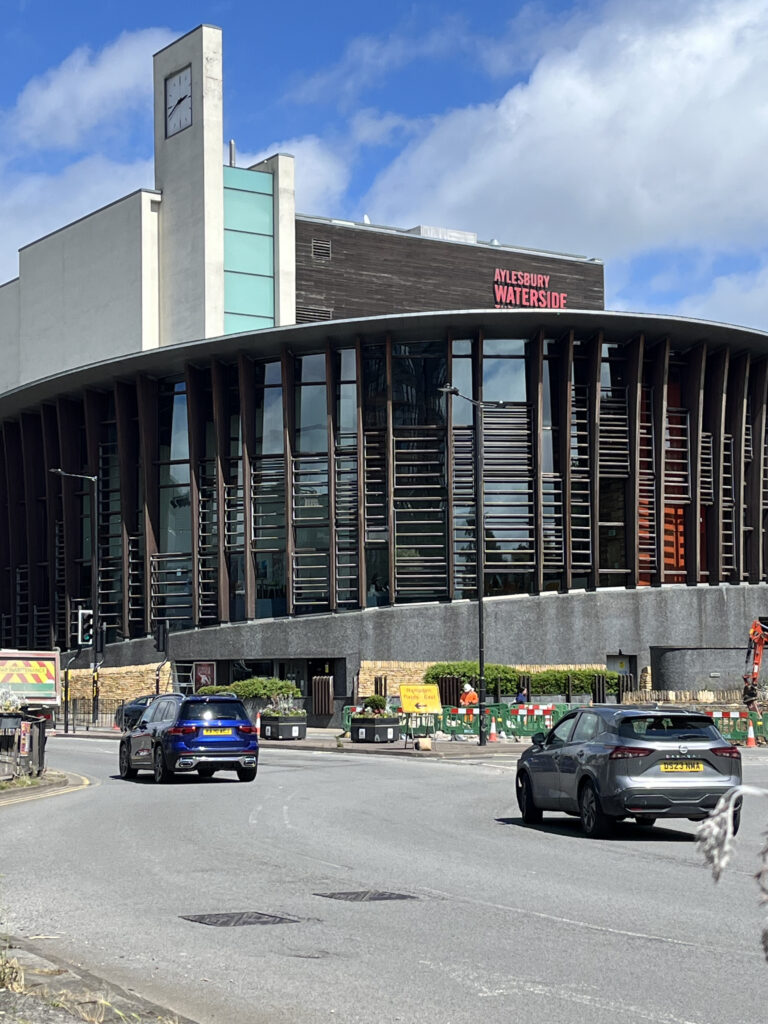
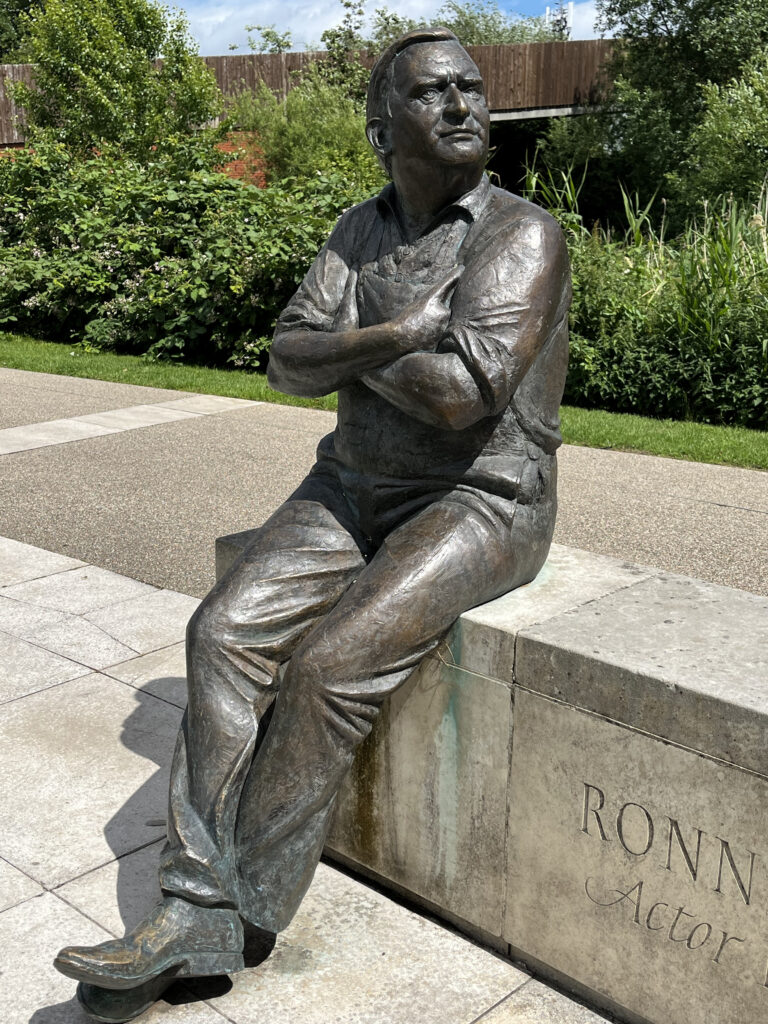
If you stop by the theatre, please say hallo to Ronnie Barker whose life-size statue can be seen in the grounds. There he sits, on a bench in an iconic pose, wearing his typical Porridge clothes, although the town actually celebrates the fact that he began his career here in 1948 when he joined the Aylesbury Repertory Company.
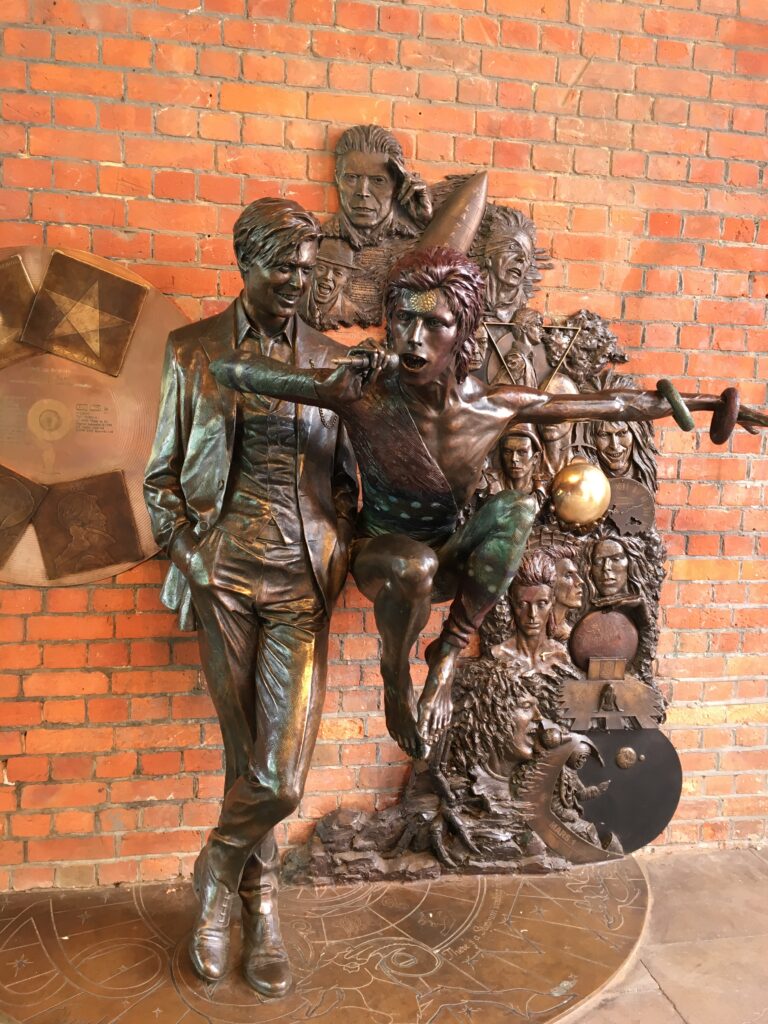
You’ll find a number of statues dotted around but the best one is of David Bowie, installed under the historic arches at the bottom of Market Square. Various David Bowie tracks are played through an audio system every hour between 9am and 9pm.
It’s definitely worth a visit even if you have to hang around waiting for him to sing to you.
The installation commemorates his connection with the town where, in 1971, he performed some of his world debuts including the Ziggy Stardust album Five Years where he references the Market Square.
Such was his following in the town that it is said that shortly after his death from cancer of the liver, a petition was started to rename the town Aylesbowie! Thank goodness they didn’t.
Aylesbury is home to the Roald Dahl Children’s Gallery (I didn’t know he was a fighter pilot and a spy during the Second World War! – a true adventure story of his own). The Gallery had won many major awards and is attached to the ‘unstuffy’ Bucks County Museum with enough history of its own to fill a book.
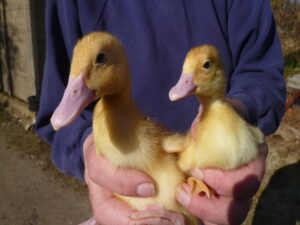
This is also the home of the renown Aylesbury ducks which you probably won’t see but can read about in A-Z of Aylesbury, Places – People – History. These famous birds, distinguishable by their adult white feathers, pale pink beaks and orange feet (not a colour-combination I would recommend!) are bred by only one authorized breeder whose family has been in the business since the mid-1770s.
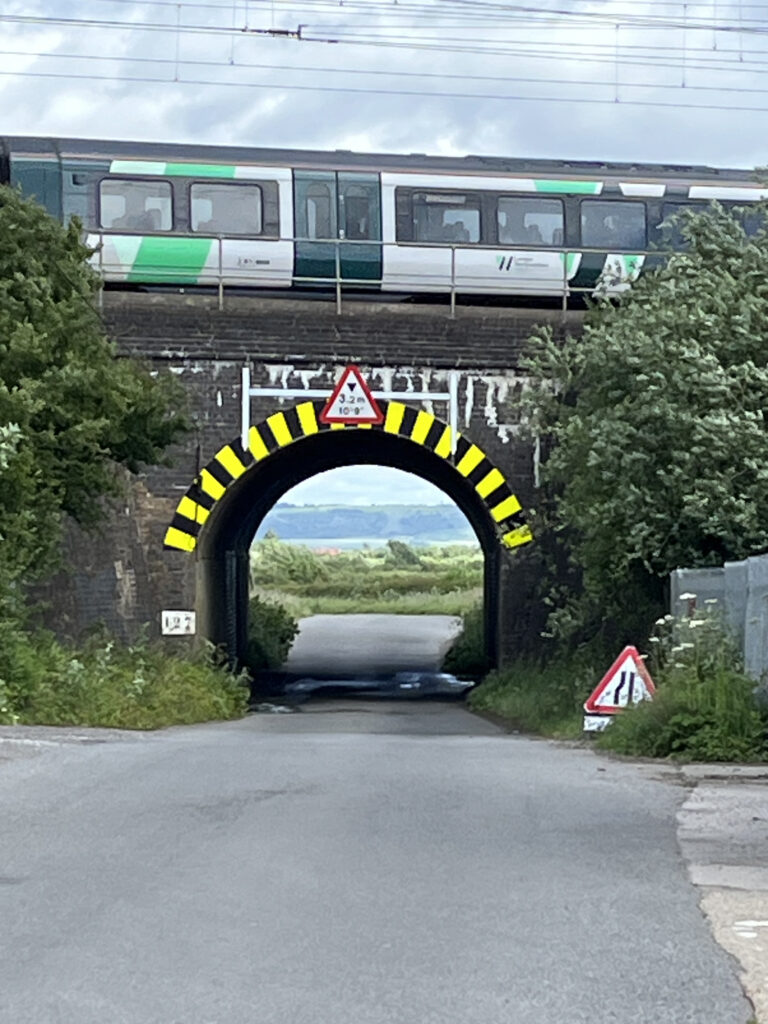
Aylesbury is a real treasure of a town that also used to house the factory which built the Cubitt car. In the early twentieth century it could reach the dizzying speed of up to 50 mph! However, talking of treasure, I discovered that the Great Train Robbery took place nearby. I took a photo of the bridge close to where the men were caught and I found out that not all of their stolen money has been found. It could be somewhere close by because they were holed-up here for many days. I must take a shovel next time I visit!
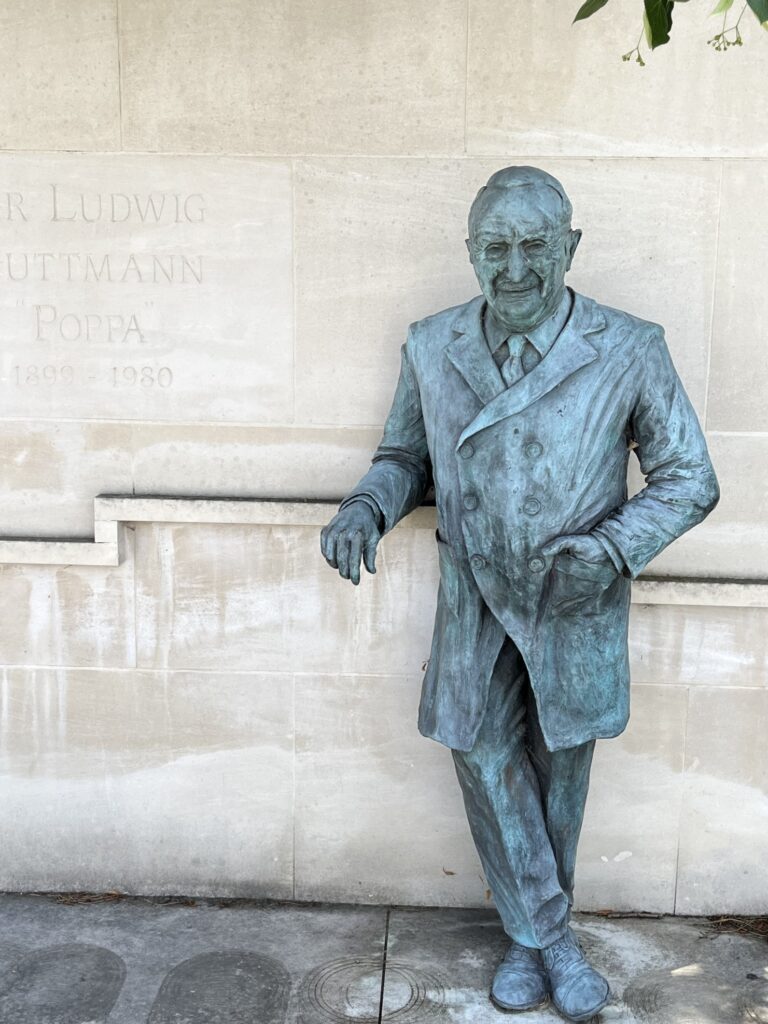
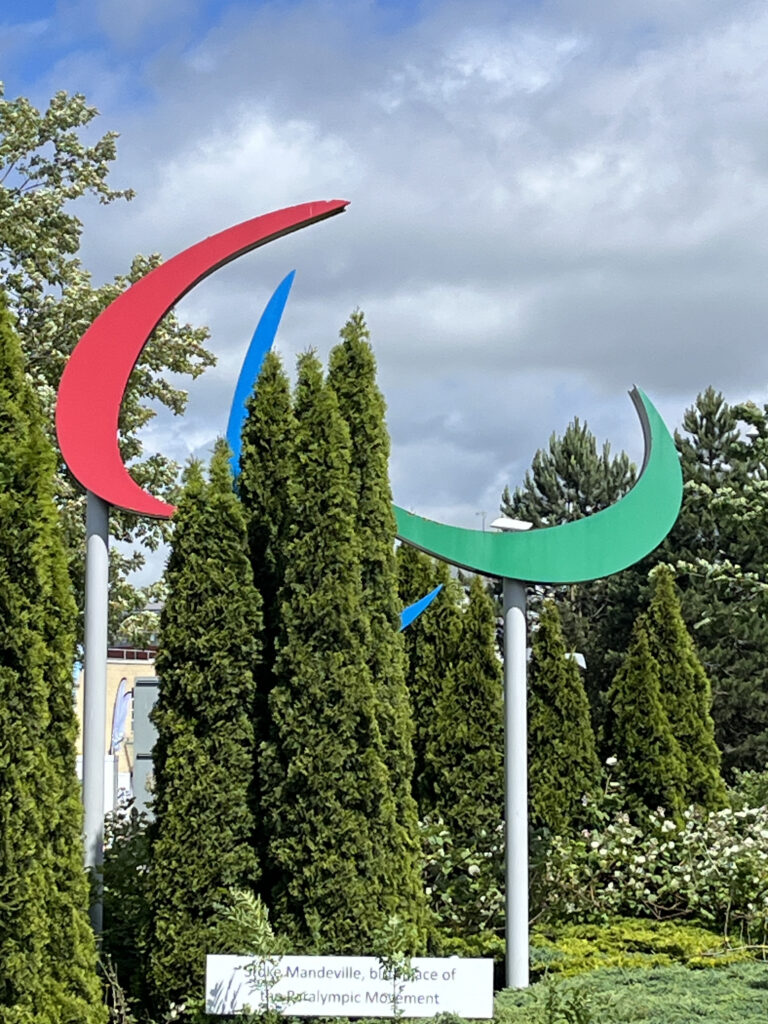
Two miles from the town centre is Stoke Mandeville Hospital. I know you wouldn’t normally go there for a jolly visit, but it’s worth seeing the Dr Guttmann’s life-size statue complete with a space beside it for wheel-chair users to have their photo taken with him. Sir Ludwig Guttmann was a most remarkable man – fleeing Germany because he and his family were Jewish, setting up a Spinal Unit in the hospital under his own terms, and unconventionally making sport compulsory for rehabilitating disabled people. The games he invented here later became known as the Paralympic Games and a bronze bust taken from a moulding of this statue is displayed at every Winter and Summer Paralympic Games throughout the world. If you visit the statue, please give him a salute from me.
The Three Agitos is the paralympic symbol which can be seen (but only just) as you enter the hospital grounds. The symbol comes from the Greek meaning ‘I move’.
A-Z of Aylesbury, Places, People, History, can be ordered directly from Amberley Publishers, or from other retailers.
One’s Royal Windsor & Eton
One of the most picturesque towns, well two actually, are Windsor and Eton, so take your camera if you enjoy photography. If you’d rather see someone else’s pictures, take a look at two books on the subject where, as in all my books, you’ll find over one hundred photographs in each. I have written another A to Z, this one entitled A-Z of Windsor & Eton, and Secret Windsor & Eton.
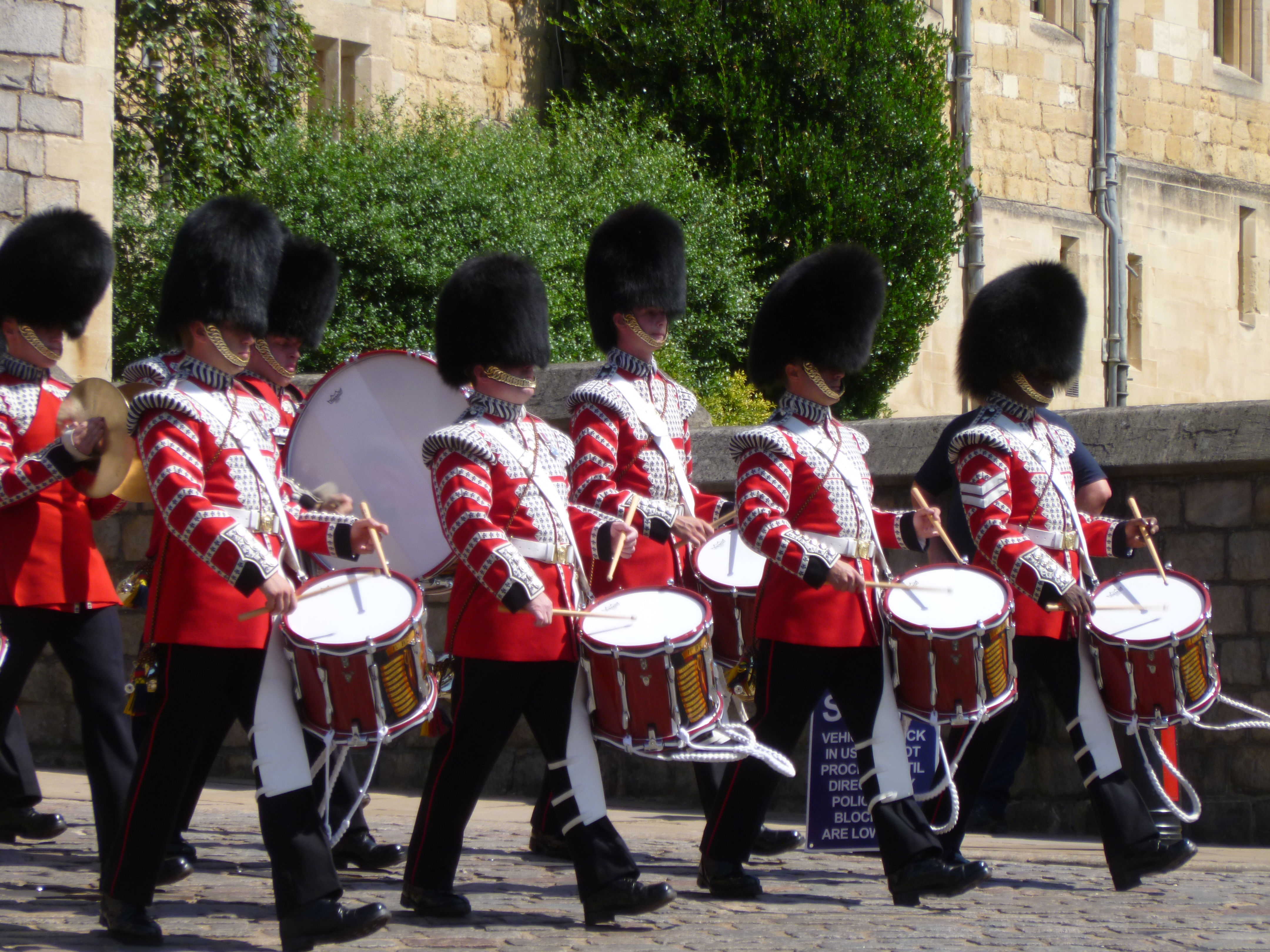
If you arrive in Windsor before 11am, be sure to visit the castle to watch the Changing of the Guard ceremony. Providing the weather conditions are suitable they are led by a Regimental Band, a Corps of Drums, or occasionally by a pipe band. It’s a colourful and very British tradition with rousing and patriotic music – just the right vibe in which to start your day of exploring. It’s worth checking on the internet before you go to make sure they are marching, and if you’re lucky you might catch the Irish Guards with their mascot Irish wolfhound leading the parade.
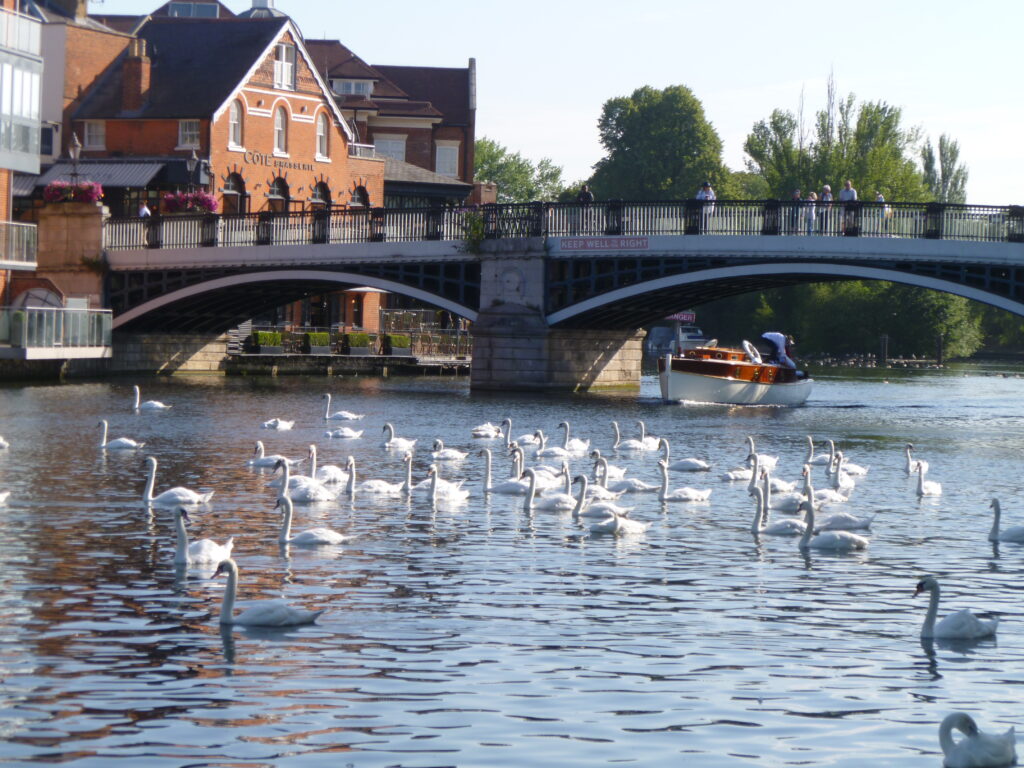
Another ceremony is that of the annual Swan Upping on the River Thames, where the mute swans are counted and their cygnets are health checked. If you want to watch them work on this stretch of the river, the boats leave Eton boathouse by Windsor/Eton Bridge at 8:30am, so an early start is necessary. They usually feature on the television news every year. Did you know that swans usually mate for life and have been known to die from a broken heart after losing their partner?
Sydney Camm, who, according to the Hawker aircraft company founder was ‘undoubtedly the greatest designer of fighter aircraft the world has ever known,’ was born in Windsor in 1893. A replica of the Hawker Hurricane, possibly his most famous plane along with the Harrier ‘jump jet’, can be seen in Alexander Gardens.
The Hurricane shot down more aircraft during the Battle of Britain than all other defending machines and anti-aircraft defences combined. He was interested in aviation from an early age when he and his brother made model aircraft and secretly sold them to the boys at Eton College! It’s surprising what you can learn when you’re out and about.
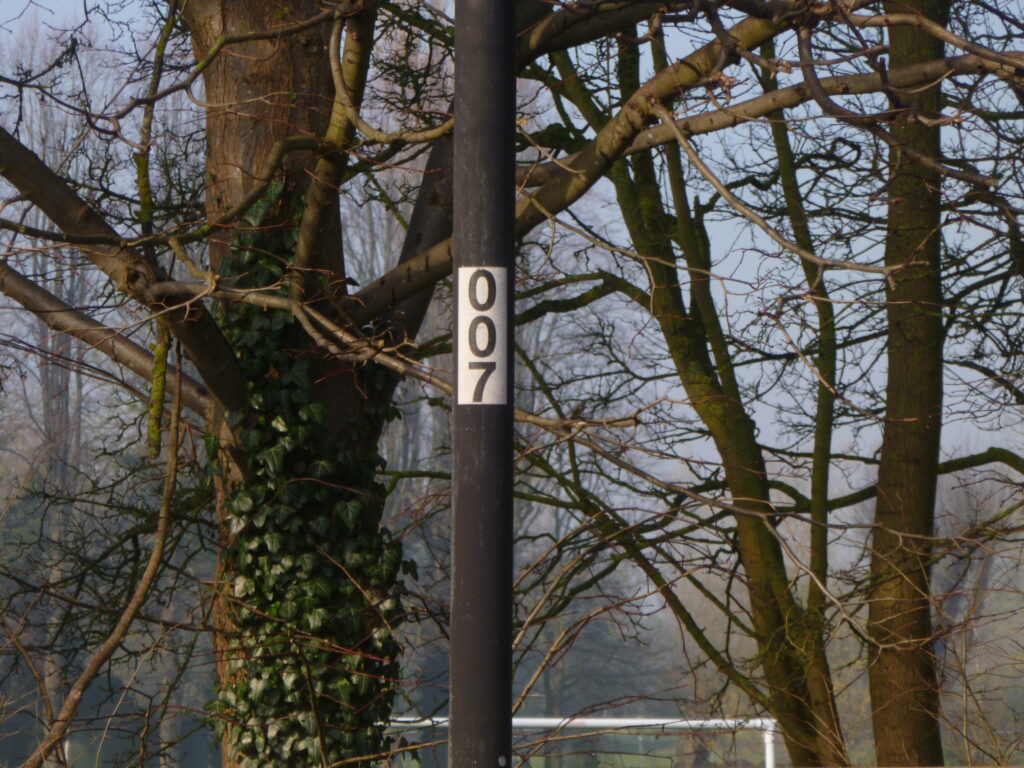
Of course, a walk over the town bridge to Eton is a must. Eton College, known colloquially as the Gentlemen’s Factory, is one of the earliest brick buildings in the country. Prince William, Harry and over twenty British prime ministers have been educated here. Ian Fleming also attended this school and lodged at Timbralls House where a nearby lamp post numbered 007 is said to have inspired him to give James Bond his code name.
Hungry? Well, you can’t visit Eton without having an Eton Mess, can you? It’s made with a mixture of strawberries, meringue and whipped cream. Records show that in 1893 the desert was first served at annual cricket matches where Etonians played against pupils of Harrow School. Brown Windsor soup is also said to have originated from the town where guide books may inform you that it was a favourite of Queen Victoria, however there is no official record of this. It gained the reputation of ‘awful food’ and featured in two Carry On films, Fawlty Towers, and the Goon Show. I couldn’t find it on sale anywhere, but you might be luckier, or perhaps unlucky!
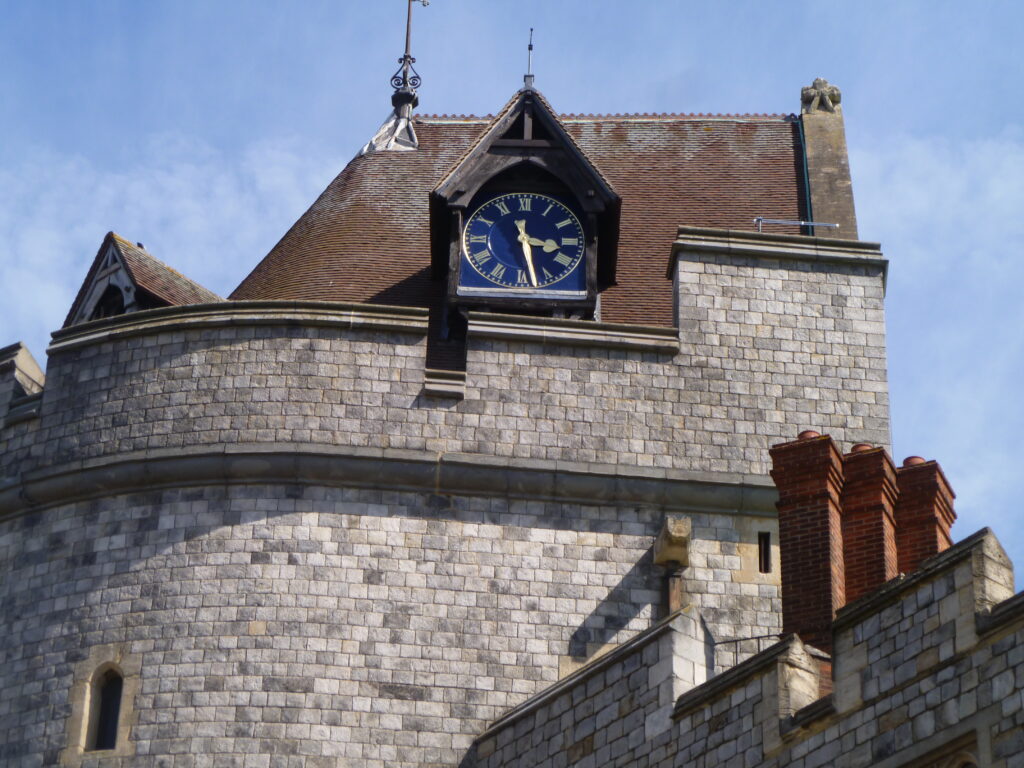
Windsor Castle dominates the town and its popularity with visitors means that it’s advisable to get tickets in advance if you want to see inside. The Curfew Tower, with 13 feet thick walls, is one of the protected views in the two towns. It houses bells which chime three times a day – at 9am, noon and 6pm to the tune of St David’s, and also still sports a cannon inside the top of the tower facing the town bridge. In the event of any likely siege, prepare to duck! By the way, did you spot the clock buried in the pavement half-way up the hill? No? I bet you walked over it without even noticing!
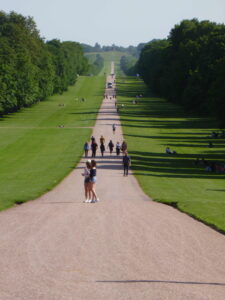
If you’re craving some peace and quiet, the Long Walk has it in abundance. This is probably the most photographed pathway in the country where overseas royalty and statesmen would be driven enabling them to approach the castle in grandeur. Park Street, one of the oldest thoroughfares in Windsor, leads into the Great Park, and you can’t fail to notice the Two Brewers pub with its colourful hanging baskets and tubs. The building stands on part of the site occupied by the Black Horse pub. This was built around the early 1700s, which, after 160 years of trading was closed down owing to its ‘colourful’ clientele!
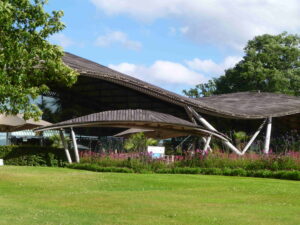
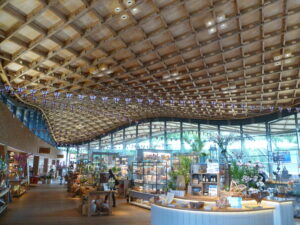
Fancy some flowering plants and shrubs? Then Savill Garden is the place to go whatever time of the year you choose. It includes interconnecting gardens such as the Hidden Gardens, Spring Wood featuring Himalayan rhododendrons and Chinese magnolias, the Summer Wood and Summer Gardens, the New Zealand Garden, Autumn Wood and the Winter Beds. You could take a picnic or visit the glorious shop/restaurant underneath an undulating timber grid-shell roof, which is beautiful both inside and out.
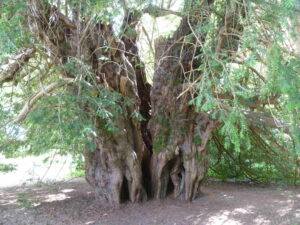
Just down the road from Windsor you can visit Runnymede where I could wax lyrical about all the things to see there, but my favourite of all is the Ankerwycke yew tree, growing gracefully old at the age of approximately 2,500. You can find it near to where the signing of the Magna Carta took place.
A-Z of Windsor & Eton, Places, People, History, can be ordered directly from Amberley Publishers, or from other retailers.
Secret Windsor & Eton
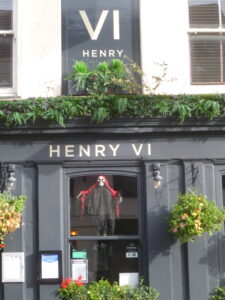
There is so much to see here that perhaps even a week may not cover it all. After writing the A-Z book I was asked to write Secret Windsor & Eton which is in a different format, but still contains over a hundred photos.
This is set in seven chapters, each with their own subject, and includes many items that can be difficult to find without intensive research, or perhaps may not be obvious to the casual sight-seer.
One of the chapters is on ghosts (no, I don’t either!) but it was great fun researching and writing about it – oh, the number of haunted pubs I had to visit!
You’ll find many bridges in and around Windsor and Eton and one of my favourites is the pretty wooden bridge at Barnes Brook in Eton – a great place to either sit for some peace and quiet, or to eat your sandwiches! Its secret is too long to write here, so you’ll have to read the book to find out. Another bridge that caught my eye is Brunel’s Bow and String Bridge and is the world’s oldest wrought iron bridge still in regular service.
Another chapter is on Transport Through the Ages where I had a ride on a yellow duck boat. These carry visitors around the streets in Windsor before splashing down on to the river. It’s a lovely way to spend an hour or two when the sun is shining.
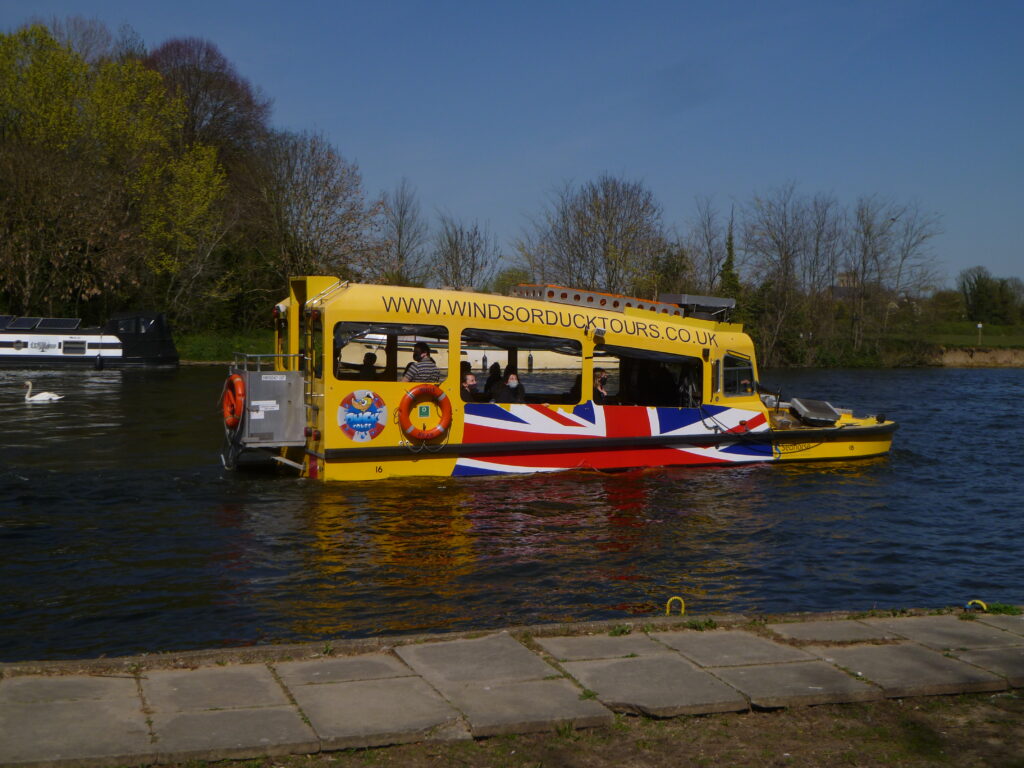
Britain was provided with 2,000 of these similar amphibian trucks by the USA during the Second World War to ferry supplies from ships to the beaches, and have since been adapted for the town’s visitors.
It’s also worth taking a bus ride around the town to learn more of its history. What the recording may not tell you is that the only suitable code for London Transport to have on the side of the buses in Windsor was WC! The unfortunate pairing of these letters has since been replaced with WR when the garage at Ware in Hertfordshire closed. Oh, and talking of WC, ladies must visit the ‘ladies’ in River Street where the walls are covered in sets of decorative tiles displaying Edwardian scenes to show how elegantly fashionable the town had become. Sorry – I have no idea what’s inside the ‘gents’!
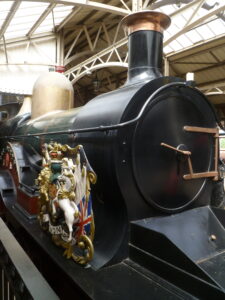
If you like to shop, there is a great selection here. The words ‘One Does Like to Shop’ is written above the doors just inside the Windsor Shopping entrance. This popular shopping complex is situated in front of Central Station and if you walk to the end of the building you can see a full-scale replica of Queen Victoria’s steam engine. A great place to stop for a coffee when one needs a break from one’s shopping.
Another place to shop is Eton, known as one of the prettiest villages in England, consisting of a mile-long, narrow High Street with a few smaller streets leading from it. There’s a lovely mix of eclectic independent shops here, but before you start, check out the small viewing tower just over Windsor Town Bridge.
Please stay longer if you can, or revisit if it’s easier for you. Legoland is nearby if you have children or grandchildren with you (oh! I thought you were venturing out on your own!), as well as Savill Garden with its undulating roof, Ascot, Old Windsor, and beautiful Runnymede where you can visit the spot where the Magna Carta was signed.
On the way to Ascot you’ll probably pass its major roundabout. Stop if you can (not on the roundabout!) and pay homage to the statue of the War Horse. This is the first national memorial dedicated to the millions of horses, mules and donkeys who gave their lives in the First World War, and the statue is portrayed with its hooves around a twist of barbed wire. The emblem of the War Horse Memorial Fund is the purple poppy and you can see its poppy memorial close by. I hope you go to some of these places, especially if you’re a single lady. You won’t regret it. Both the residents and the tourists are all friendly, so you’ll soon find someone to chat to.
Secret Windsor & Eton can be ordered directly from Amberley Publishers, or from other retailers.
What the Dickens in Rochester
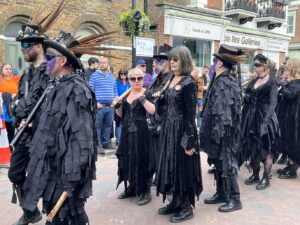
Another town which is a joy to visit is Rochester in Kent. They love to party and they do it with great pizzaz. To prove it they have not one, but two festivals. Both are great fun and I couldn’t possibly choose as to which one is the best, so if you can, go to both.
This is another perfectly safe place to visit, and although it’s not particularly fair of me to mention it here (but I will) I always tuck my handbag under my arm with my purse inside, and I never, ever, keep my mobile in my back pocket. I suddenly thought of this because the festivals draw people from all over the country, in fact even from abroad, and you never know who’s on the lookout for a handy-looking mobile.
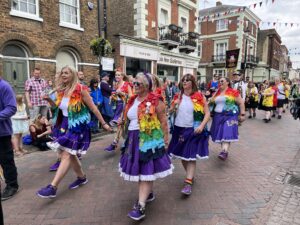
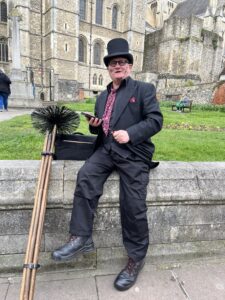
However, back to more interesting matters. The first major festival of the year is the Sweeps Festival, held over the May Day Bank Holiday, when a whole procession of sweeps, Morris dancers, and now even those in steam-punk outfits, parade through the town.
It celebrates the work carried out over 300 years ago when men and small boys climbed inside chimneys in order to clean them. May Day was their only holiday throughout the whole year. With the addition of the Morris dancers, it’s now a colourful festival with many visitors dressed in Victorian clothing.
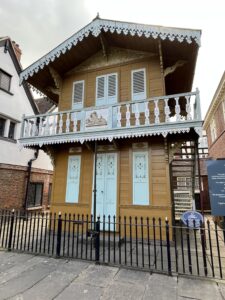
If you’re interested in Dickens who lived nearby, the town has many references to him and his characters. See if you can find the Swiss chalet which was his writing retreat.
Did you know that this miniature chalet was gifted to him in kit form, and arrived in fifty-eight boxes with instructions for assembly written in French? Makes you realise that our version of flat-pack furniture isn’t so bad after all, doesn’t it?
You’ll probably want to take lots of photos here, but if you’re wearing Victorian or sweeps clothing, try not to get caught with your mobile in your hand. It ruins the fantasy!
The second major festival is the Christmas Dickens Festival. If you miss the midday parade along the High Street, fear not, there’s a candlelight parade in the evening with fake snow if the real thing isn’t available. Christmas markets are held on three consecutive weekends – usually the last weekend in November and the first two in December, and are held in the castle grounds.
Oh, a castle! Unfortunately, not a complete one, and although it’s still referred to as a castle. It’s really a Keep providing a fantastic view of the town and countryside from the top. This has a long fascinating history including the fact that part of the castle crashed down when King John’s men threw burning fat from forty large pigs onto the timber props setting fire to them. However, it was starvation that eventually drove out the barons. Gruesome stuff.
The complete opposite of gruesome is Rochester Cathedral. Now, I admit I’m totally smitten with cathedrals but this is the best one ever. (Ok, I haven’t been to Canterbury yet but I’d be surprised if it is better than the one in Rochester). This one has everything and it’s worth taking a guided tour inside so that you don’t miss anything. If you don’t have time, see if you can find the famous Wheel of Fortune which dates back to the 1200s, the Green Men carvings in the ceiling, and the deliberate mistakes on the tiled floor.
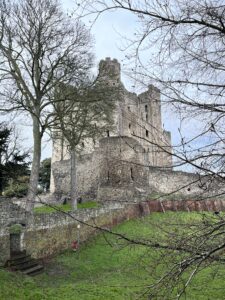
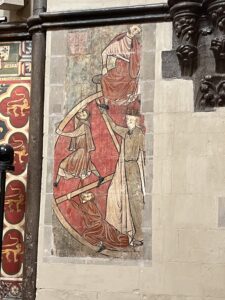
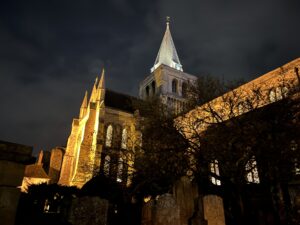
I could spend hours in here, and luckily there’s refreshments available inside, useful for when you start flagging. If you’re around in the evening, look up at the cathedral spire which lights up in different colours to celebrate the work of various charities and special commemorative days.
I wonder how many references to Dickens you’ve found as you wander around the town, and did you catch sight of the listing submarine in the River Medway? It’s a Russian U-475 Foxtrot-class Black Widow submarine, badly in need of restoration. Before being used as a training submarine it served with the Soviet Baltic Fleet; when fully armed it could carry twenty-two torpedoes. It was decommissioned in 1994, used as a museum near the Thames Barrier and then Folkestone and has now found its home close to Rochester Bridge. In 2014 it was used as the set for the film Black Sea starring Jude Law – a far more welcoming venture than its original purpose.
A-Z of Rochester, Places, People, History, can be ordered directly from Amberley Publishers, or from other retailers.
Goings-on in Dorchester
One town that wasn’t on my radar to visit was Dorchester. I had never thought of it, and anyone writing on the subject of the county of Dorset would probably concentrate on Weymouth or somewhere along the Jurassic coast. I was asked to write an A-Z of Dorchester, so I went along with a kind of hey-ho attitude. But, oh boy! What a surprise! It’s filled with the most amazing sights (and sites).
Did you know that this is where Judge Jeffreys, the hanging judge, held his Bloody Assizes? That the Tolpuddle Martyrs were arrested and tried for mutiny in the main court house – now a museum which is open for visitors? That the town has a massive underground network of tunnels? And that Prince Charles’s (as he was then) vision of a new concept of modern-day living was realized in Poundbury, just a short distance from Dorchester?
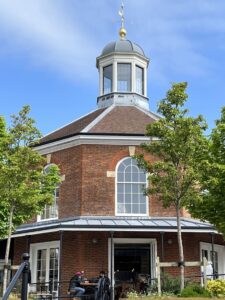
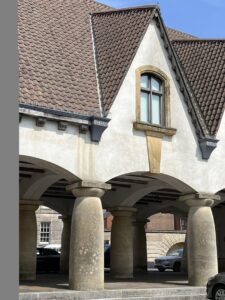
So, back to the town itself. Do you like architecture? It has the highest number of listed buildings in any British high street.
Historic buildings? Try a walk through the woods to Thomas Hardy’s cottage, or the hangman’s cottage, tucked away by the River Frome.
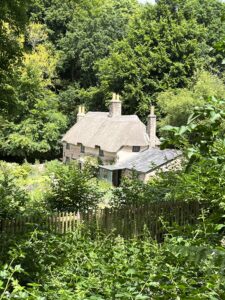
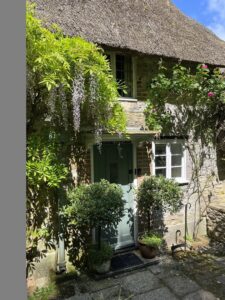
Animals? Then make sure you visit the annual Dorset County Show held in the fields at the bottom of the high street.
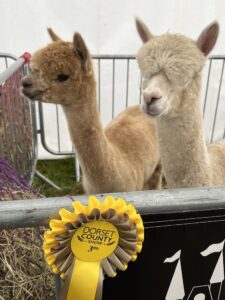
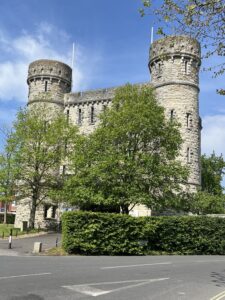
If you’re really into Roman history, watch the Beating of the Bounds, especially if you bring something noisy with you to bang or shake, or visit the carefully preserved Roman Town House, or see the mosaics in the Dorset Museum & Art Gallery. Maumbury Rings was used as an amphitheatre after the Roman invasion and an annual Roman festival is still held here. If you go on one of the town’s organized walks, or better still, read A-Z of Dorchester, you can learn all about the grisly goings-on at Maumbury Rings.
Thomas Hardy is well-represented here with his statue at Top O’Town and many of his artefacts are displayed in the Dorset Museum. I’ve mentioned this museum twice already, and it’s one of the best I’ve visited in a long while (only perhaps beaten by the one in Cairo!) but you mustn’t miss the other five! Yes, Dorchester is a town of great variety.
There’s the Keep Museum, featuring a magnificent military record of the Devonshire and Dorset regiments, and in strict contrast, the Tutankhamun Exhibition where you can see authentic recreations of the hundreds of treasures found in his burial chamber.
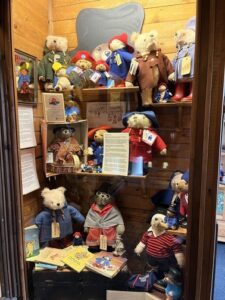
The Dinosaur Museum displays life-size reconstructions of dinosaurs and their skeletons, and you can even smell the breath of a Tyrannosaurus rex if you dare. On a cuddlier note, there’s the Teddy Bear museum, and also the Terracotta Warriors Museum – not so cuddly, but perhaps more exotic.

You can visit the courtroom in the Shire Hall museum where you can read all about the many people who were imprisoned here as well as seeing the cells in which they were kept. Possibly their most well-known prisoners were the Tolpuddle Martyrs and although you can see the room and the conditions they were kept in, it’s well-worth visiting the Tolpuddle Martyrs Museum just outside Dorchester.
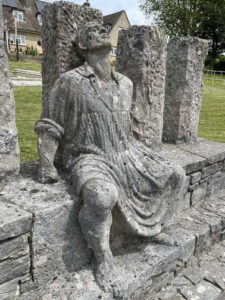
While you’re on the outskirts of the town, I hope you have time to visit Sculpture by the Lakes, and Athelhampton House and Gardens which has been called the most picturesque house in the county. The gardens have been manicured to an inch of their lives, and if you get hungry, they have a lovely tearoom and restaurant.
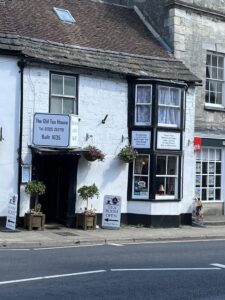
On the subject of food, back in Dorchester there is the Old Tea House at the top of the High Street where you can meet Debbie, the larger-than-life proprietor. Her son makes the best jam and clotted cream scones I have ever tasted. Every time I go to Dorchester, and I’ve been a number of times to research the book, I always eat at Al Molo, Judge Jeffreys lodging house, which is further down the hill on the opposite side to the tea house. Delicious food, moreish cocktails, and excellent service. Top notch indeed.
I’ve left out so much in this piece about Dorchester, and I could easily go on adnauseum, but instead I shall leave you to do your own exploring. Have fun.
A-Z of Dorchester, Places, People, History, can be ordered directly from Amberley Publishers, or from other retailers.